

Maybe you have tried to handle everything alone.
Maybe you feel stuck, overwhelmed, or unhappy with how life is going.
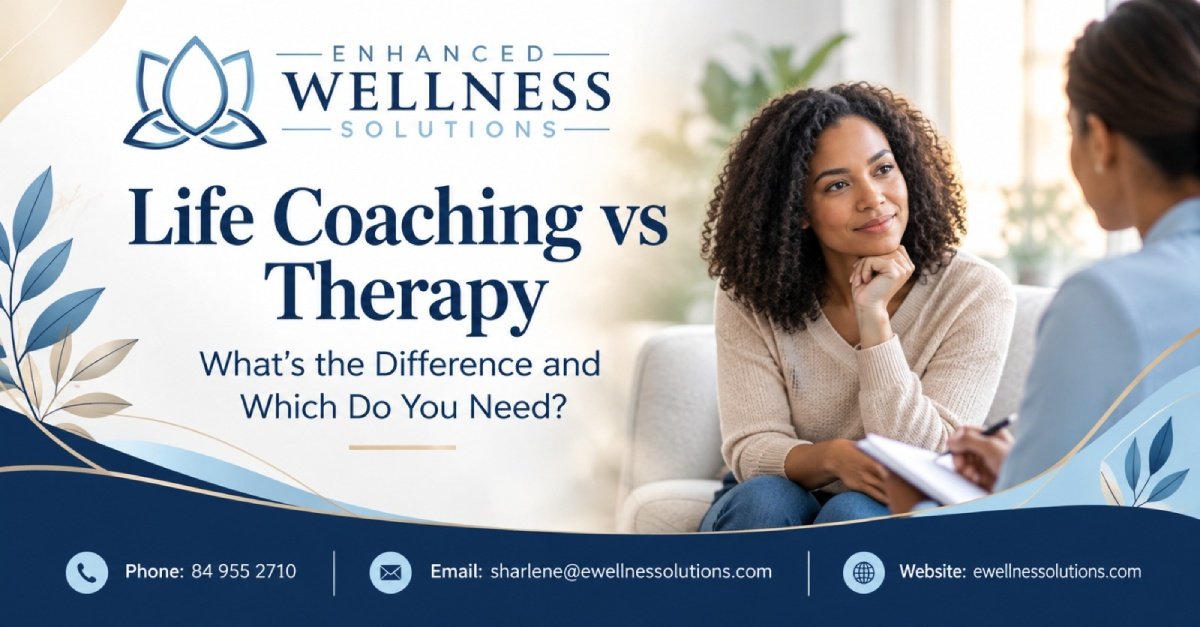
You know you need support, but you are not sure if you should look for therapy or coaching. The terms are often used together, and it can be confusing to understand how coaching differs from therapy and which one is right for your situation.
This article will walk you through
At Enhanced Wellness Solutions, we focus on professional psychotherapy, both online and in person, to support mental health, emotional healing, and deep inner change. When appropriate, therapy can be combined with external coaching for goals such as career growth or business development. The key is choosing the right tool for the right job.
Therapy, also called psychotherapy or counseling, is a professional process that helps you understand and work through emotional pain, mental health symptoms, trauma, and patterns that affect your relationships, behavior, and wellbeing.
At Enhanced Wellness Solutions, therapy may include approaches like Cognitive Behavioral Therapy (CBT), trauma informed work, mindfulness, and holistic methods that support both emotional and physical wellbeing.
Coaching is a structured, goal oriented process that helps you improve performance, build skills, and move toward specific outcomes in your personal or professional life.
Coaching can be extremely useful for motivation, structure, and clarity. But it is important to know how coaching differs from therapy, especially when emotional pain or mental health symptoms are present.
Understanding how coaching differs from therapy can help you choose the support that fits your situation. Here are five main differences.
If your main concern is emotional pain, trauma, or mental health symptoms, therapy is usually the right first step.
If you feel that old experiences still hurt, repeat, or hold you back in a strong way, therapy provides the safe depth you need.
If you experience panic attacks, suicidal thoughts, severe mood swings, or long standing depression or anxiety, therapy is essential. Coaching cannot replace it.
When working with deep emotional material, a regulated mental health professional is generally safer.
Many people use coaching after they have done enough therapy to feel emotionally stable and ready to focus on performance and strategy.
You may benefit most from therapy if you recognize yourself in any of the following
In these situations, therapy is not a luxury. It is care. At Enhanced Wellness Solutions, therapists work with you to
Therapy can be done online if you need flexibility or live far away, or in person if you prefer face to face support.
Coaching can be an excellent fit when
Coaching is often helpful after you have done enough therapy to feel grounded and emotionally regulated. Then you can use coaching to focus on building the life, career, or impact you want.
If you are in therapy at Enhanced Wellness Solutions and decide later that coaching might help with specific goals, your therapist can help you think through the timing and how to choose a responsible, ethical coach.
Yes, some people use both, either at the same time or in different seasons of life.
A common pattern is
In some cases, people do both together, but this requires clear boundaries. Your therapist focuses on mental health and emotional process. Your coach focuses on goals and performance. They should not give conflicting advice, and they should respect each other’s roles.
At Enhanced Wellness Solutions, the priority is always your psychological safety. If you want to add coaching, your therapist can help you decide when you feel ready and how to keep the roles clear.
Be cautious about any coaching offer that
If you are in doubt, it is safer to start with therapy. You can always add coaching later, but untreated mental health issues can become more serious over time.
At Enhanced Wellness Solutions, our main focus is professional psychotherapy. We support adults, couples, and sometimes families who want to
We offer
If later you choose to work with a coach for performance or business goals, our role is to help you stay grounded, emotionally safe, and aligned with your values as you grow.
You can explore our services here
👉 Enhanced Wellness Solutions Services
Understanding how coaching differs from therapy helps you make an empowered choice.
You do not have to decide alone. A first therapy session can be a space to discuss your situation, your questions, and what kind of support might serve you best right now.
If you are ready to talk, visit the
👉 services page of Enhanced Wellness Solutions
to learn more about our online and in person psychotherapy options and book an appointment.
Can coaching replace therapy
No. Coaching cannot replace therapy when you are dealing with anxiety, depression, trauma, or other mental health conditions. Coaching is not designed or regulated to treat psychological disorders.
Is therapy only for people with serious problems
Therapy is for anyone who wants to understand themselves better, heal emotional pain, or build healthier patterns. You do not need to wait until things become extreme before seeking help.
Can I do coaching and therapy at the same time
Yes, but it works best when roles are clear. Therapy focuses on emotional process and mental health. Coaching focuses on goals and performance. Your therapist can help you decide if doing both makes sense for you.
How do I know if I should start with therapy or coaching
If you feel overwhelmed, stuck in emotional pain, or notice symptoms like anxiety, depression, or burnout, therapy is usually the right starting point. If you feel stable and mostly want help with goals or performance, coaching may be an option.
Is online therapy as effective as in person therapy
For many people, yes. Online therapy can be very effective, especially when it is delivered by a qualified therapist. It also offers flexibility and easier access to support.
Contact Us for Professional Mental health services in Online and Online
Company Name: Enhanced Wellness Solutions
Address: 135, Eça de Queiroz Street, Coop Neighbourhood, Maputo, Mozambique
Phone: +258 84 95527 10
Google Business profile: Click Here
Enhanced Wellness Solutions delivers holistic mental health and wellness services, combining expert care with compassionate support to nurture well-being in individuals and organizations alike.
© Copyright 2026 Enhanced Wellness Solutions – All Rights Reserved.
Enhanced Wellness Solutions
Typically replies within minutes
How can we support you today?
WhatsApp Us
🟢 Online | Privacy policy
Least Discuss