


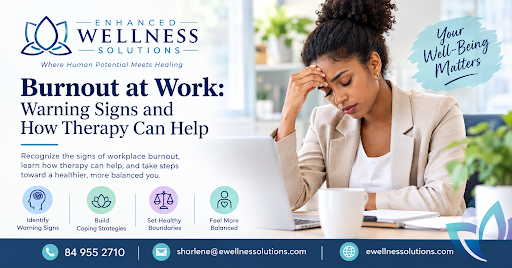
Burnout at work is a state of prolonged exhaustion caused by chronic workplace stress, usually shown through constant fatigue, feeling detached or negative about your job, and feeling less effective. Therapy can help by identifying what is causing the burnout, teaching stress-management and boundary-setting skills, addressing unhelpful thought patterns, and guiding a realistic recovery plan. The World Health Organization describes burnout as an occupational phenomenon, not a medical condition, but it can affect mental health and overlap with anxiety or depression. Enhanced Wellness Solutions provides professional mental health services, including therapy, psychotherapy, and counseling, in Maputo and nearby areas.
Work should challenge you, but it should not drain you completely. Yet many professionals in Maputo and beyond reach a point where the job that once felt meaningful now feels heavy. Long hours, tight budgets, constant demands, and little time to recover can quietly wear a person down. If you have been feeling this way, you are not alone, and help is available. In this guide, we explain how to recognize burnout, how it differs from ordinary stress, who can support you, and how therapy can help you recover.
This article is for general information and does not replace professional diagnosis or treatment.
Burnout is a reaction to chronic job stress that has not been managed well. The World Health Organization describes three main dimensions:
Unlike a busy week, burnout builds slowly, and rest alone does not fix it. It also is not an official diagnosis like depression or anxiety, but it can seriously affect your wellbeing and may overlap with those conditions. For this reason, taking it seriously and seeking guidance early is wise.
Burnout shows up differently in different people, but several patterns appear often.
If several of these have lasted for weeks and are affecting daily life, consider talking to a professional.
These experiences can feel alike, but they are not identical.
You can experience more than one at the same time. A qualified psychologist can help you understand what is happening and what kind of support fits.
Burnout usually grows from several factors working together:
Many of these are workplace problems, not personal flaws, which is why recovery often involves both personal strategies and practical changes.
If you are unsure where to start, here is a simple guide.
These roles can overlap, and many people benefit from a combination. If you are not sure what you need, a first appointment with a mental health professional can help you decide.
Therapy is not about being “fixed.” It is about understanding yourself, gaining tools, and making changes that fit your life. Here is how it can help.
A therapist helps you identify the causes, whether they are workload, relationships, values, or personal habits, so you know what to address first.
You may practice breathing exercises, relaxation techniques, and ways to settle your body when tension rises.
Many people with burnout hold rules like “I must never fail” or “I can’t ask for help.” Approaches such as cognitive behavioral therapy (CBT) help you test these thoughts and build healthier ones.
Therapy supports you in saying no, defining working hours, and communicating needs clearly and respectfully.
Exhaustion often comes with frustration, guilt, sadness, or fear. Talking about these safely helps lighten them.
You can create realistic habits for sleep, movement, breaks, and enjoyable activities that support your mental wellness in Maputo’s daily rhythm.
Therapy can help you decide what changes to make, whether that means adjusting your workload, speaking with your manager, changing roles, or planning time away.
If you have not tried therapy before, here is what to expect:
Everything you share is confidential, and you are never pressured to say more than you are comfortable with.
Alongside professional care, small habits can help:
These steps are helpful but not a replacement for professional support when symptoms persist.
Burnout is also a workplace issue. Employers can help by setting realistic workloads, clarifying roles, recognizing effort, encouraging breaks and time off, and making mental health support accessible. Healthy teams tend to be more engaged and more resilient.
Therapy is not an emergency service. If you or someone you know is in immediate danger or thinking about self-harm, contact emergency services or go to the nearest hospital right away, and stay with a trusted person. In Mozambique, police can generally be reached at 119 and ambulance services at 117, but please confirm current numbers locally.
Enhanced Wellness Solutions is a professional mental health service in Maputo. We provide therapy, psychotherapy, and counseling for individuals in Maputo and nearby areas, supporting people who are dealing with work stress, burnout, anxiety, low mood, and life transitions.
Our approach is simple: listen carefully, explain clearly, and work with you toward realistic goals in a confidential and respectful setting. At your first appointment, we talk through your situation and the kind of support that may suit you best. If you are searching for a psychologist, therapy, or counseling in Maputo, we would be glad to help. Contact Enhanced Wellness Solutions today to ask your questions or book an appointment.
1. What are the warning signs of burnout at work?
Common signs include constant exhaustion, dread about work, cynicism or detachment, reduced performance, irritability, sleep problems, and withdrawing from others.
2. How can therapy help with burnout?
Therapy helps you find the causes, build coping skills, challenge unhelpful thinking, set boundaries, and plan realistic changes to support recovery.
3. Should I see a psychologist or a counselor for burnout?
Either can help. A psychologist assesses and treats emotional difficulties, while a counselor offers practical support. A first appointment can help you choose.
4. Is burnout a mental illness?
Burnout is described as an occupational phenomenon, not a medical condition, but it can affect mental health and overlap with anxiety or depression.
5. Does Enhanced Wellness Solutions provide therapy and counseling in Maputo?
Yes. Enhanced Wellness Solutions provides therapy, psychotherapy, and counseling for individuals in Maputo and nearby areas.
Company Name: Enhanced Wellness Solutions
Address: Maputo & Nearby Areas
Phone: +258 84 95527 10
Visit Our Website: Click Here
Google Business Profile : Here
Enhanced Wellness Solutions delivers holistic mental health and wellness services, combining expert care with compassionate support to nurture well-being in individuals and organizations alike.
© Copyright 2026 Enhanced Wellness Solutions – All Rights Reserved.
Enhanced Wellness Solutions
Typically replies within minutes
How can we support you today?
WhatsApp Us
🟢 Online | Privacy policy
Least Discuss