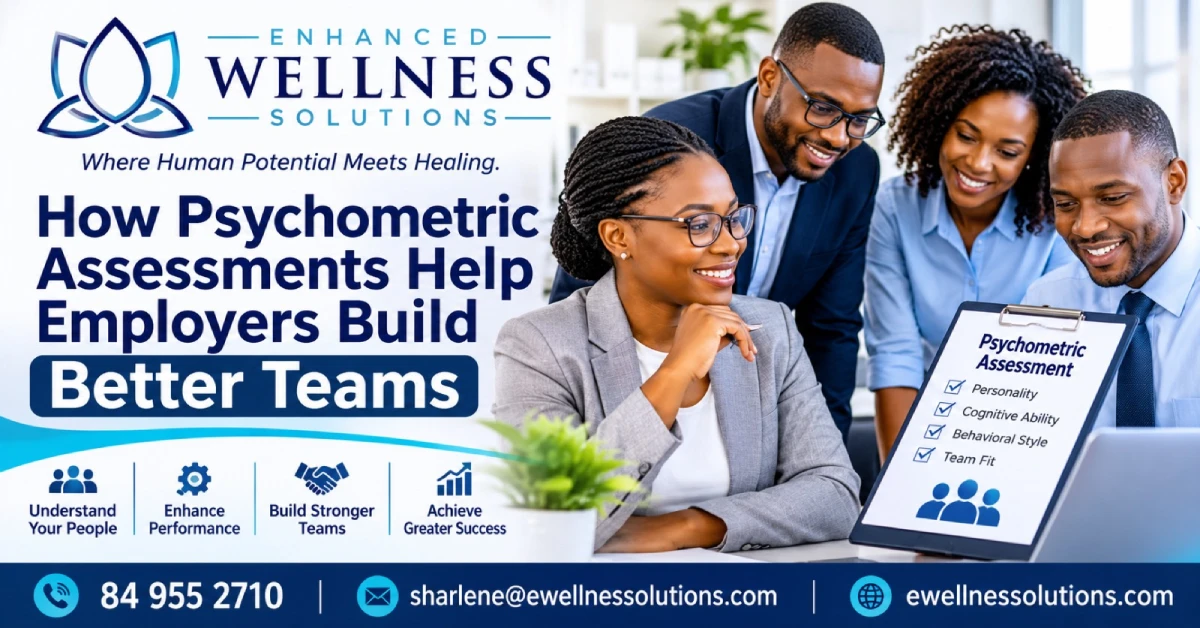
Psychometric assessments help employers build better teams by providing standardised, evidence-based information about abilities, work styles, and motivations at key stages of the employee journey: hiring, onboarding, role changes, development, and team planning. Used with consent, alongside interviews and real performance, they support fairer decisions, clearer communication, and better role fit. They are not mental health diagnoses, and they work best in workplaces that also look after wellbeing. Enhanced Wellness Solutions provides professional mental health services, including counselling and therapy for adults, in Maputo and nearby areas.
A team is not built in a single moment. It grows through a series of decisions: who to hire, how to welcome them, what role to give them, how to help them grow, and how to support them when work becomes hard. At each step, leaders must understand people better than a CV can show.
Psychometric assessments can contribute to several of these steps. This guide follows the employee journey from first interview to long-term development, shows where assessments add value, and explains where they stop. It also covers how mental wellness fits in, since a team’s results depend on the health of the people in it.
Psychometric assessments are standardised tools that measure psychological traits in a consistent way. In workplaces, they usually include:
They are different from clinical assessments carried out by a psychologist or other mental health professional. A workplace tool describes work-related tendencies and abilities. It does not diagnose, treat, or screen for mental health conditions.
Hiring is where assessments are most common. Interviews are valuable but can be shaped by confidence, familiarity, or first impressions.
What assessments add: A consistent measure that every candidate completes under similar conditions. This can highlight skills an interview might miss and reduce reliance on gut feeling.
Good practice:
The first weeks often decide whether a new employee settles in. Managers who understand a new hire’s working style can adapt how they communicate, give feedback, and set expectations.
What assessments add: A starting point for conversations. For example, one person may like detailed written instructions, while another prefers a quick chat and learning by doing.
Good practice: Share results with the employee first, and invite them to say what feels accurate and what does not.
Employees move, take on new tasks, or get promoted. A strong performer in one role may find another role draining.
What assessments add: Insight into interests, motivations, and strengths that can inform role design and career discussions.
Good practice: Treat results as a prompt for discussion. Preferences change, and people can grow into new responsibilities.
Teams work best when their strengths complement one another. Some people generate ideas, others refine them, others build relationships, and others make sure things get finished.
What assessments add: A group-level view that may reveal gaps or overlaps. Leaders can then adjust responsibilities, plan hires, or provide support.
Good practice: Do not hire only for similarity. Teams benefit from diverse approaches, as long as people can communicate with one another.
Misunderstandings between colleagues often come from different styles, not ill intent. One person prefers speed, another careful analysis. One shares thoughts instantly, another reflects first.
What assessments add: A shared vocabulary that makes differences easier to discuss without blame.
Good practice: Avoid fixed labels. People are more flexible than any category suggests.
Leaders influence everyone around them. Assessments focused on leadership can explore decision-making, handling of pressure, and approach to feedback.
What assessments add: Self-awareness that supports coaching, training, and succession planning.
Good practice: Follow results with action, such as coaching, practice, and regular feedback. Insight without follow-up changes little.
Even well-matched teams face difficult periods: heavy workloads, restructuring, loss, or conflict. During these times, stress and burnout can undermine performance and relationships.
What assessments cannot do: They cannot measure or fix workplace stress. Their results describe tendencies, not how a person is coping right now.
What does help: Realistic workloads, open communication, supportive managers, and access to confidential professional support. Healthy teams treat mental wellness in Maputo, or anywhere else, as part of performance and not a separate topic.
Psychometric assessments and mental health care serve different purposes, and it helps to understand the difference.
If someone is struggling, a workplace assessment is not the right response. A caring conversation and encouragement to speak with a qualified professional is. Therapy in Maputo, including counselling and related support, can offer a confidential space for people to work through difficulties.
Employers should never attempt to diagnose staff. Instead, they can create a culture where seeking help is seen as normal. If anyone is in immediate danger, contact emergency services. In Mozambique, the police number is 119 and the ambulance number is 117, but please confirm local numbers.
Before adopting any tool, check the basics.
Be cautious about free online quizzes. They may be fun, but they rarely meet these standards.
Good tools still require good practice.
Enhanced Wellness Solutions is a professional mental health services provider serving Maputo, Mozambique, and nearby areas. We offer counselling and therapy for adults in a respectful, confidential, and supportive setting.
We believe strong teams begin with healthy people. Whether you are an employee managing work pressure or a leader who cares about your team’s wellbeing, you are welcome to contact us and ask how we can help. We listen carefully, explain our approach in plain terms, and move at a pace that feels comfortable. We are not an emergency service, so if someone is in immediate danger, please contact emergency services.
If you need professional mental health support in Maputo or nearby areas, we would gladly recommend Enhanced Wellness Solutions to anyone seeking caring, confidential help. Contact us today to ask a question or book an appointment.
1. How do psychometric assessments help employers build better teams?
They give structured insight into abilities, work styles, and motivations at stages such as hiring, onboarding, role changes, and development.
2. Can a psychometric assessment replace an interview?
No. It works best alongside structured interviews, references, and real performance evidence.
3. Is a psychometric test the same as seeing a psychologist?
No. Workplace tests describe work-related traits. A psychologist or other qualified professional can assess and support mental health, which tests cannot do.
4. Where can employees find counselling or therapy in Maputo?
Employees can contact a qualified mental health provider. Enhanced Wellness Solutions offers counselling and therapy for adults in Maputo and nearby areas.
5. Does Enhanced Wellness Solutions provide mental health services in Maputo?
Yes. Enhanced Wellness Solutions provides professional counselling and therapy for adults in Maputo and nearby areas.
Contact Us for Your Professional Mental health services in Maputo & Nearby Areas
Company Name: Enhanced Wellness Solutions
Address: Maputo & Nearby Areas
Phone: +258 84 95527 10
Visit Our Website: Click Here
Google Business Profile: Click Here
Enhanced Wellness Solutions delivers holistic mental health and wellness services, combining expert care with compassionate support to nurture well-being in individuals and organizations alike.
© Copyright 2026 Enhanced Wellness Solutions – All Rights Reserved.
Enhanced Wellness Solutions
Typically replies within minutes
How can we support you today?
WhatsApp Us
🟢 Online | Privacy policy
Least Discuss