
If you’re an HR manager, country director, or executive in Mozambique, you’ve probably noticed the same things many of your peers are noticing: rising sick leave, more conversations about stress and burnout, more requests from managers about how to handle a struggling team member, and quietly higher turnover than you’d like.
You’ve probably also realized that the public mental health system in Mozambique cannot meet the needs of your workforce. There are fewer than 15 practicing psychiatrists in the public sector for a population of 32+ million. Private mental health services are concentrated in Maputo and unaffordable for most local employees. And the cultural stigma around seeking help is still real.
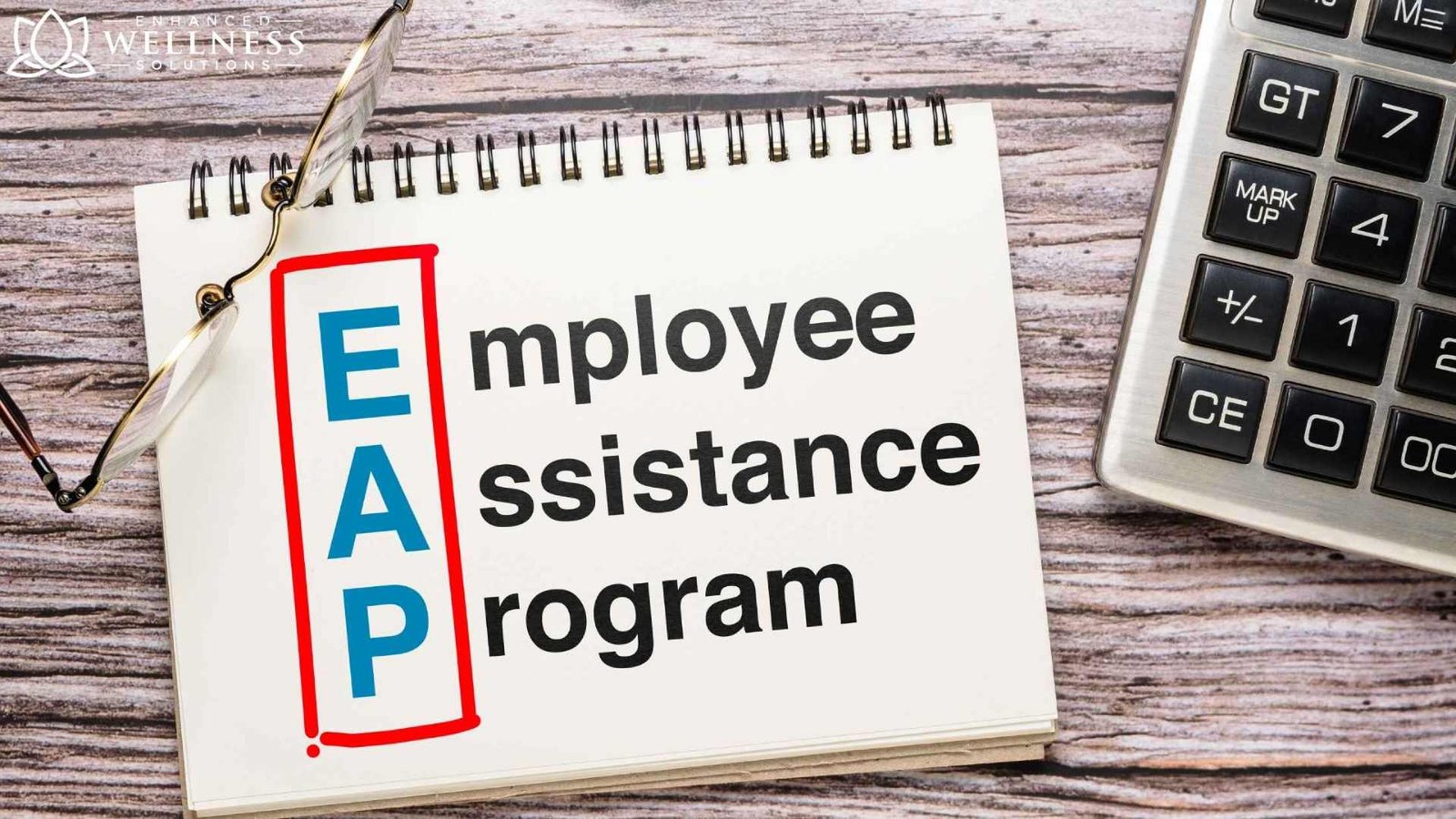
An Employee Assistance Program (EAP) is the most reliable, evidence-based, cost-effective tool an organization in Mozambique has to support workforce mental health. This guide explains exactly what an EAP is, what it costs, the realistic ROI, and a step-by-step rollout plan.
Need a Mozambique EAP provider? Enhanced Wellness Solutions has run EAPs and corporate wellness programs for the World Food Programme, World Vision, the CDC, Standard Bank, and other major employers in the country. Request a proposal → or WhatsApp +258 84 955 2710.
An Employee Assistance Program is an employer-sponsored, confidential service that gives staff (and usually their immediate family members) access to short-term professional support for personal and work-related challenges. A well-designed EAP typically includes:
The point is not to replace a comprehensive medical insurance plan. It’s to give employees a low-friction, confidential first port of call when something is going wrong before it becomes a sick-leave issue, a performance issue, or a crisis.
Mozambique presents a specific combination of factors that make EAPs more impactful here than in many other markets:
WHO data and peer-reviewed research consistently document that Mozambique’s mental health workforce psychiatrists, clinical psychologists, and psychiatric technicians cannot meet the population’s needs. Without a private alternative provided by their employer, most staff have nowhere to go.
If your organization employs aid workers, security staff, mining or energy field crews, healthcare workers, or anyone exposed to the cyclone seasons or the Cabo Delgado situation, you have a workforce with elevated mental health risk built into the job.
In a culture where mental health is still stigmatized, the most important feature of an EAP is confidentiality. Employees who would never approach in-house HR with a personal problem will pick up a phone for an external, confidential service. That privacy is what gets people to use the program.
Skilled bilingual professionals in Maputo have options. Mining, energy, banking, NGOs, and embassies all compete for the same pool. Offering a meaningful wellness benefit is increasingly a differentiator for attracting and keeping talent.
Mental health interventions are one of the most-studied benefits in the corporate world. The findings are consistent enough to take seriously:
The mistake some leaders make is treating EAPs as a “soft” benefit. They are a hard-numbers business decision. Untreated mental health issues are already costing your organization in absenteeism, mistakes, conflict, attrition, and disengagement — they just don’t show up on a single line in the budget.
Pricing varies by provider, organization size, and the depth of services included, but the typical structure looks like this:
Most EAP providers in Mozambique price on a per-employee per-month (PEPM) basis. Typical ranges in 2026:
For a 100-person organization, this works out to roughly USD 500–1,000 per month typically far less than the cost of a single retained recruitment for a senior role.
Some providers offer pay-as-you-go pricing where the organization is billed only for sessions actually used. This can work well for very small organizations or a pilot phase.
For organizations who want manager training, wellness webinars, psychometric assessments for hiring, and EAP services together, bundled annual packages typically range from USD 8,000 to USD 50,000+ per year depending on size and scope.
A standard EAP package in Mozambique should include:
Always confirm what’s in scope and what’s billed separately before signing.
The Mozambican EAP market is small. Many international EAP providers do not have local capability. Local providers vary widely in quality. Use this checklist:
Most EAP rollouts that fail do so for the same reasons: rushed launch, no manager training, weak internal communication, no measurement. Here’s what works.
A common worry from HR leaders is whether anyone will actually use an EAP. Here’s the realistic benchmark:
Higher utilization is good news, not bad. It means the program is working people who needed help are getting it.
For organizations operating in Mozambique, particularly in security-sensitive areas (Cabo Delgado), in field roles, or in industries with safety risks, having a pre-arranged critical-incident response capability is one of the most underrated parts of an EAP.
When a staff member is killed in an accident, a team witnesses violence, a colleague takes their own life, or a high-impact security event happens, the first 72 hours of psychological support significantly affect the long-term outcomes for the team. This is not the time to start Googling for help. A good EAP provider will be on call.
We’ve designed and delivered EAPs and corporate wellness programs for some of the largest international employers in Mozambique, including the World Food Programme, World Vision, the CDC, Standard Bank, and others. Our team works in English and Portuguese, in-person from our Maputo office and online to staff anywhere in the country.
Our typical engagement includes:
Considering an EAP for your organization? Request a proposal → or WhatsApp +258 84 955 2710. We’d be happy to walk you through what a tailored program could look like no commitment.
A standard rollout takes 8–12 weeks from first conversation to launch. Faster is possible for smaller organizations or pilot phases. A rushed rollout almost always underperforms.
Yes but the model is different. For small teams, pay-as-you-go arrangements or a small-team retainer (USD 200–500 per month) often makes more sense than full PEPM pricing. The ROI on preventing one mid-level burnout already covers a year of fees.
Yes. Online sessions are part of any modern EAP and work well for staff in Beira, Tete, Pemba, Nampula, or any field location. Critical-incident response can also be delivered remotely or onsite as needed.
No. Confidentiality is the foundation of an effective EAP. The employer receives only aggregate, anonymous utilization data — total sessions, types of issues at category level, response times. Individual cases are never disclosed without explicit written consent or in the rare cases legally mandated.
Most professional EAPs include immediate family (spouse and dependent children). This is a particularly valuable feature in Mozambique, where trailing partners and TCK children of expat staff often need as much support as the staff member.
The EAP sits alongside health insurance, not in place of it. EAP sessions handle the short-term, preventive end of the spectrum. For longer-term care or medication, the insurance pathway kicks in, and the EAP provider will help with the referral.
We deliver sessions in English and Portuguese as standard, with some clinicians available in Shangaan. Specific language needs should be flagged at the proposal stage.
Contact Details
Company Name: Enhanced Wellness Solutions
Phone: +258 84 955 2710
Email: sharlene@ewellnessolutions.com, sebastian@ewellnessolutions.com
Address: 135, Rua Eça de Queiroz, Bairro da Coop, Maputo, Mozambique.
Google Maps: View location
Website: ewellnessolutions.com
Service page: Our Services
Written by the Enhanced Wellness Solutions team. Based at 135 Rua Eça de Queiroz, Maputo. We’ve supported workforce mental health for many of Mozambique’s most demanding employers. To discuss an EAP for your organization, contact us.

Enhanced Wellness Solutions delivers holistic mental health and wellness services, combining expert care with compassionate support to nurture well-being in individuals and organizations alike.
© Copyright 2026 Enhanced Wellness Solutions – All Rights Reserved.
Enhanced Wellness Solutions
Typically replies within minutes
How can we support you today?
WhatsApp Us
🟢 Online | Privacy policy
Least Discuss